«Кухня старого Харкова»: як містяни харчами перебирали
Озвучено за допомогою ШІ (Google Cloud).
Текст перекладу
The Cuisine of Old Kharkiv: How the Townsfolk Picked and Chose Their Food
The cuisine of old Kharkiv is rooted in the cooking traditions of Slobozhanshchyna (Sloboda Ukraine), yet it stands apart through its exceptional variety and versatility. As early as the 18th century, city residents had access to a much broader selection of ingredients for traditional regional dishes. They could regularly afford food that peasants saw on their tables only on major feast days, while also indulging in delicacies that surrounding villages and slobodas had never even imagined. Kharkivites owed this diverse menu primarily to their lively fairs and markets. There, buyers could find various types of meat and fish, dried fruits, aromatic spices, seasonings, chestnuts, dates, and lemons—anything one could desire, provided they had the coin.
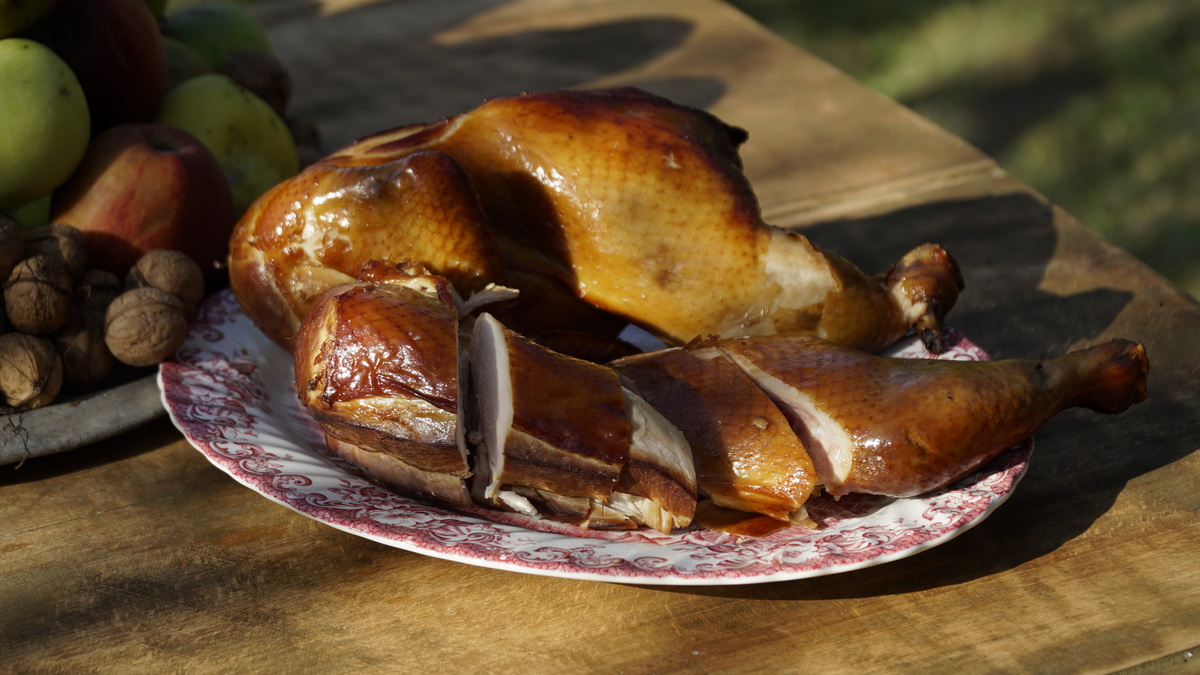
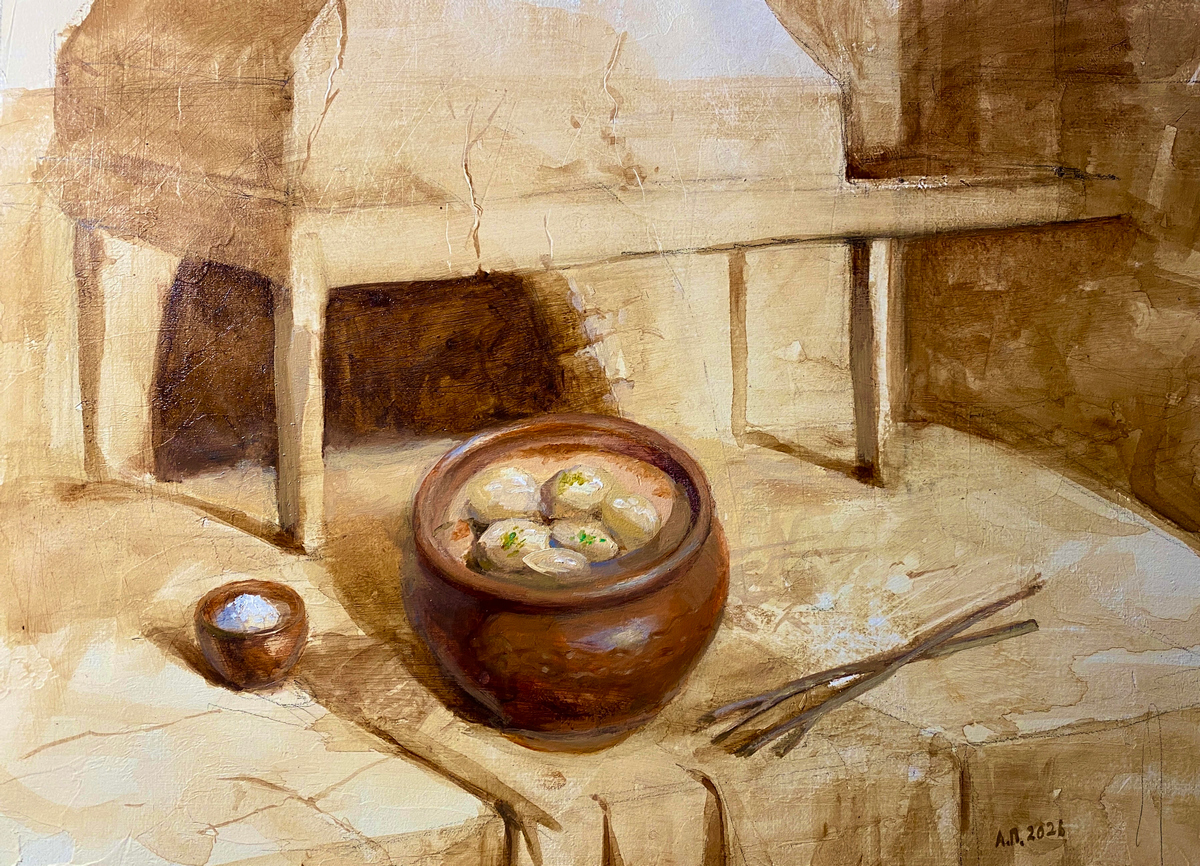
In the villages and slobodas around Kharkiv, ordinary life dictated the same repetitive daily fare. A typical household table featured rye bread, borscht (which grew progressively thinner and paler from autumn to spring), halushky dumplings, porridge (kasha), cured pork fat (salo), fish (whenever the men managed a catch), sauerkraut (if enough had been barreled down), and fermented bread drink (kvass). Dishes were seasoned almost exclusively with a single type of oil: hempseed oil. Only on major holidays could peasants treat themselves to white wheat bread, fragrant baked pies, and roast goose or duck with a crisp, golden skin.
The closer it drew to spring, the sparser the rural table became. If a peasant household ran out of beets, and subsequently beet kvass, no one would make the long trek into town just to replenish them. The housewife simply had to brew borscht using sour rye kvass instead. The same applied to sauerkraut, carrots, and onions—families made do with whatever remained in the root cellar. Fresh salo was an absolute rarity in spring or summer, as hogs were traditionally slaughtered around Christmas. Month by month, the stored fat turned yellow, hardened, and developed a bitter edge. Yet peasants were never accustomed to being picky about their provisions. Into the pot went whatever the cellar offered, and by late winter, very little was left. What that spring borscht actually looked like is difficult even to imagine.
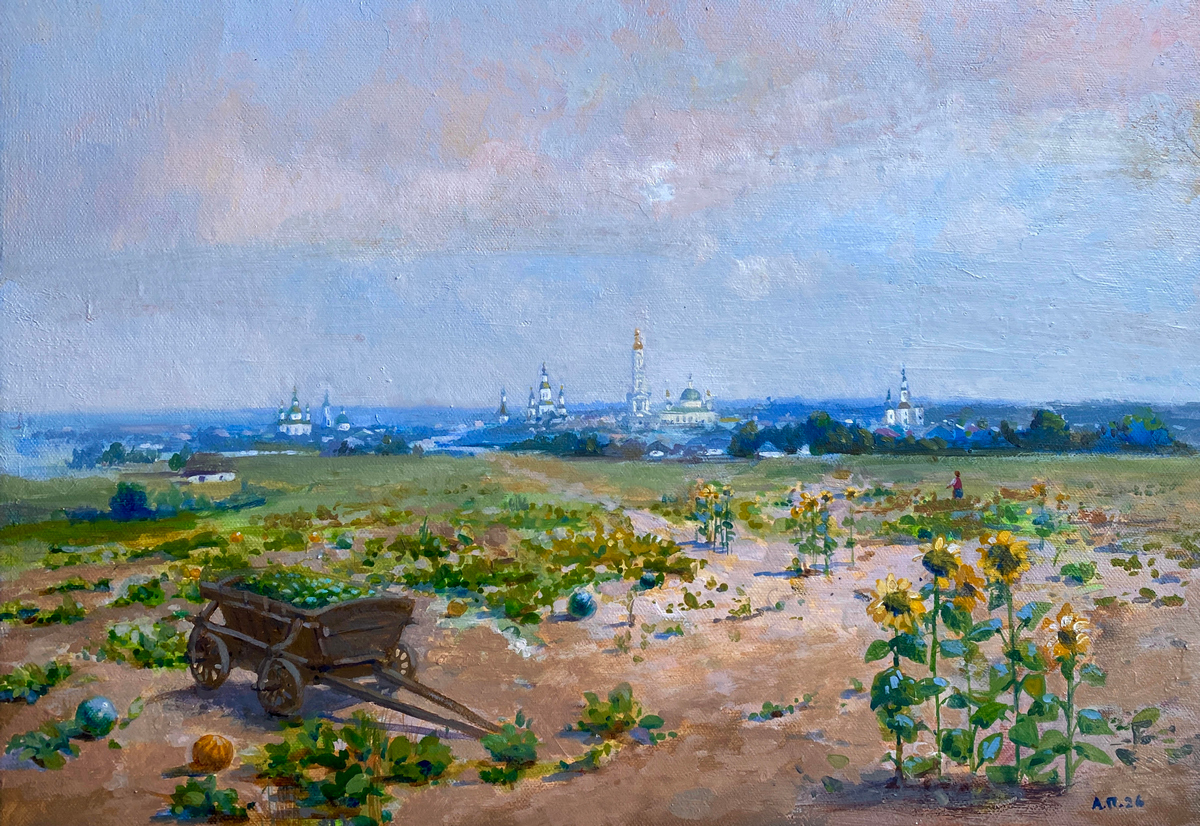
The regimental seat of Kharkiv presented an entirely different reality, especially after becoming the administrative center of the Sloboda Ukraine Governorate in 1764. While the everyday diet of early Kharkivites during the initial decades of the fortress differed little from that of the peasantry, urban life transformed rapidly. Townsfolk prospered through expanding merchant trade, skilled artisan crafts, property rentals, and freight cartage—revenue streams largely unavailable to the rural population. Higher cash incomes allowed town dwellers to spend considerably more on their tables.
If a Kharkivite ran out of beets, they had to go without for a few days at most. The city held open markets every Monday and Friday, offering an abundant selection of goods, including root vegetables carted in by successful truck farmers from nearby slobodas and outlying farmsteads (khutirs). Prices were steep: in early spring, ten beets cost 5 kopecks. By comparison, two pounds of salted cheese went for 6 kopecks, two pounds of fresh curd cheese (tvoroh) for 7 kopecks, and a pound of fresh carp, pike-perch, or bream for 6 kopecks. By the mid-19th century, ten beets fetched as much as 10 kopecks, at a time when two pounds of mutton or pork could be bought for less. For urbanites with disposable income, however, price was no obstacle—the priority was that borscht cooked with fresh beets tasted incomparably better than a pot made with sour rye kvass. If someone needed produce on a non-market day, they could ride out to the trading posts at the city toll gates, where prices were frequently lower.
Whenever a city dweller craved fresh salo, the market offered several varieties to suit every palate. One could purchase an entire pood (about 36 pounds) at once, or simply buy a couple of pounds to ensure a fresher cut on the next visit. The meat rows offered endless variety: fresh cuts and corned meat, beef and veal, pork and mutton, headcheese (studen), offal, kidneys, brains, and suckling pigs, sold both live and dressed. In the taverns of second-half 18th-century Kharkiv, roast suckling pig was on the daily menu, with up to fifty roasted on even a slow day. Open-air stalls even sold hot, ready-made beef broth, simmered on the spot in enormous cauldrons.
Poultry stalls displayed a similar abundance: turkeys, geese, ducks, chickens (with capons and poulardes later sold separately), and wild game birds, offered both live and dressed. A peasant slaughtered a chicken only when it stopped laying eggs and cash was desperately needed, since a dozen eggs long cost nearly as much as the bird itself. A living hen yielded far more ongoing value than a stewing bird. For the urban resident, a chicken was simply an ingredient. Townsfolk bought poultry whenever desired, turning it into rich soups, hearty borschts, roasting it with savory stuffings, frying it, or setting it in jellied meat broth (kholodets). A wealthier townsman would purchase a fattened capon, rub it with imported ginger and aromatic spices, and roast it until the scent drifted halfway down the street.
Fish was equally abundant during religious fasts: fresh, salted, cold-smoked, air-cured fillets (balyk), imported Dutch and Crimean herring, dried roach (taran), sabrefish, and diverse varieties of cured roe. The selection was extraordinarily broad. Long-distance imports brought sturgeon, beluga, pike-perch, Atlantic salmon, and stellate sturgeon; local river waters supplied catfish, bream, river zander, carp, river perch, crucian carp, tench, and pike.
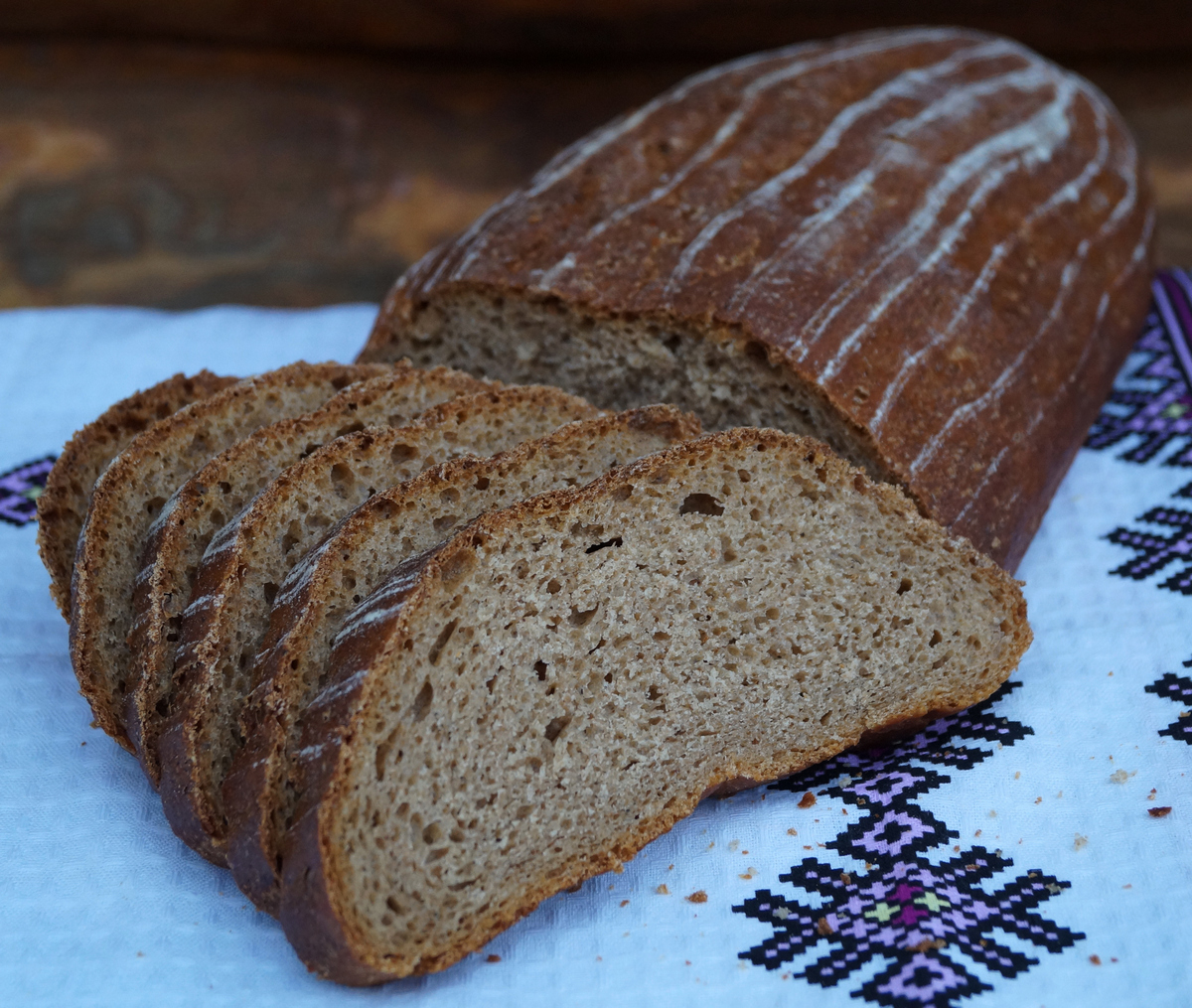
Bread in Kharkiv was traditionally baked either from pure rye flour or as palianytsia—a loaf crafted from equal measures of rye and wheat. Foreign residents shunned heavy rye bread entirely, and beginning in 1805, university students were exempted from it as well, receiving only white wheat rolls. Once foreign culinary masters established themselves in the city, well-to-do Kharkivites adopted an exclusively white-bread diet, occasionally brushing aside strict fasting rules much like their European peers. This was a costly habit: a pound of French white bread cost 5 kopecks, while ordinary rye bread cost a single kopeck.
Cooking oils diversified as well: traditional hempseed, flaxseed, poppyseed, Provençal olive oil, Italian olive oil, and, by the 1840s, sunflower oil. The dairy trade offered standard cow's butter, northern Finnish-style (Chukhonskoe) butter, as well as clarified and unclarified varieties.
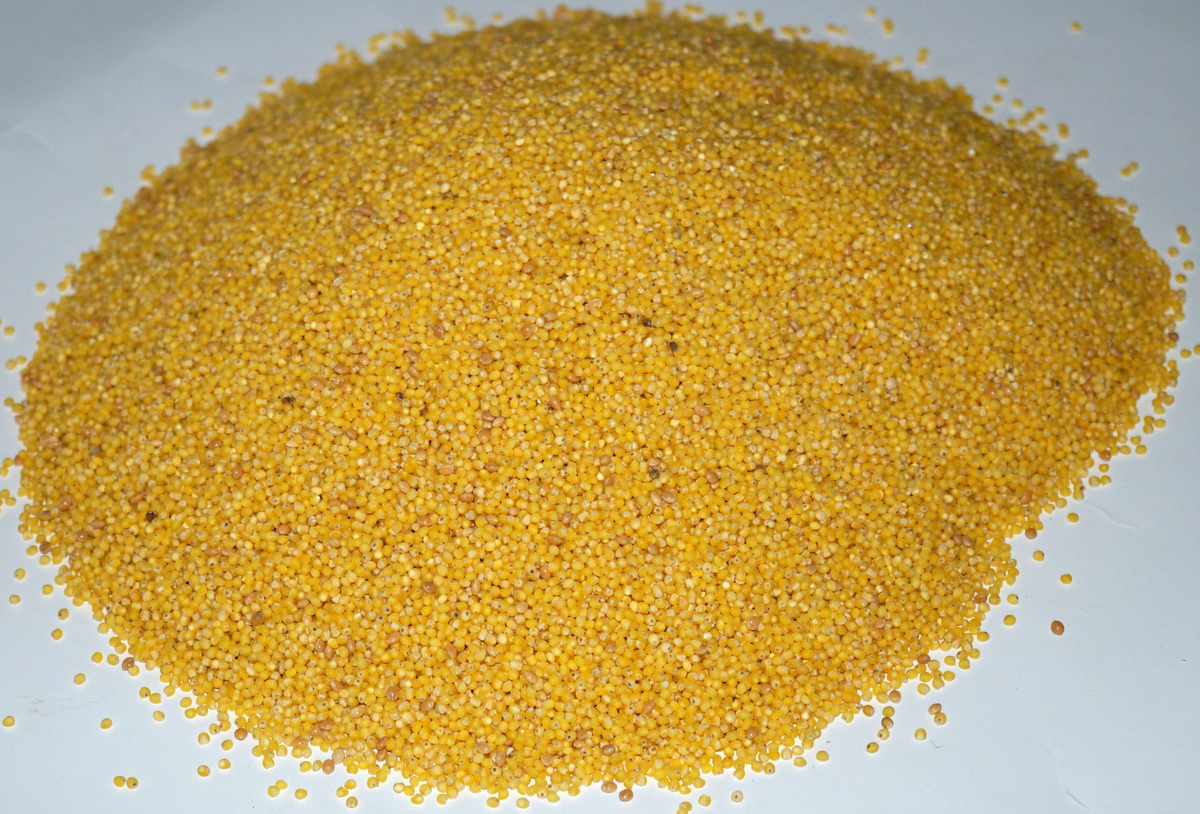
Urban markets and trading stalls also supplied bulk grains, including whole-kernel rye, wheat (across several hard and soft grades), buckwheat, oat, and barley flour. Grains and groats were sold in endless variations: buckwheat, rolled oats, pearl barley, polished wheat, and golden millet, alongside dried peas, beans, lentils, and culinary poppy seeds. Barrels were filled with pickled cucumbers and salted watermelons, fresh carrots, parsnips, celery roots, various onions, and several cultivars of sweet green peas. Cheese stalls stocked wheels from Holland, Switzerland, and France, including authentic Parmesan. Jars of green and black olives, specialty vinegars, and dried or pickled forest mushrooms rounded out the pantry.
Seasonal trade fairs were the true engine of the city’s culinary sophistication. The earliest of these—the Dormition (Uspensky) Fair, founded in 1659—allowed citizens to lay in massive winter reserves of grain, meal, preserved vegetables, cooking oils, and clarified butter. By the mid-18th century, Kharkiv hosted four major annual fairs, introducing goods once completely exotic to regional peasants: white rice, potatoes, potato starch, potato flour, coffee beans, fresh lemons, Seville oranges, dried dates, figs, almonds, raisins, walnuts, edible chestnuts, and vintage wines from Crimea and the Greek Archipelago. Later decades added dried Italian macaroni and vermicelli.
By the 1760s, Kharkiv fairs presented a lavish array of exotic spices: saffron threads, whole cinnamon, cloves, dried ginger root, nutmeg, Mediterranean bay leaves, and black, white, and red peppercorns.
During the first half of the 19th century, the luxury assortment expanded further. Fairs moved mountains of cocoa beans, loose teas, refined sugar loaves, candied fruits, fruit preserves, and chocolate confections. Vintage wines from France, Germany, Spain, and Crimea commanded immense demand, transported in massive 50-bucket casks (roughly 615 liters), half-barrels, and boxed glass bottles. Beyond the open fairgrounds, European merchants operated specialized vaulted wine cellars in the city center, pairing vintages with imported table olives, mixed pickles, truffles, salted anchovies, cured sausages, cured hams, aged cheeses, wine vinegars, cold-pressed olive oils, and brandied fruits.
This deep reservoir of ingredients enabled diverse culinary traditions across all strata of Kharkiv society: civil servants and university students, hereditary nobility and garrison officers, guild merchants and burghers, Orthodox clergy, tradesmen, and former Cossacks reclassified as military inhabitants (viiskovi obyvateli).
As early as the 18th century, Kharkiv cooks stuffed festive geese and turkeys with dried dates, an ingredient rural folk could not even identify. Kharkiv kitchens braised potatoes with cuts of choice meat at a time when most provincial villagers still dismissed the tuber as livestock feed and noble estates grew it purely for distilling raw spirits. Town bakers kneaded Easter paskas and sweet bread loaves (babky) with genuine saffron, a spice far beyond the means of the rural population. City cooks enriched broths with complex spices and were among the first in the region to adopt olive oil, and later sunflower oil, for daily frying. Braising meats with roasted chestnuts or garden herbs became an established Kharkiv practice by the end of the 18th century. The tremendous wealth of the butcher rows also gave rise to refined meat terrines and pâtés—luxuries completely unseen across the wider countryside.
The foodways of old Kharkiv occupied a singular, elevated station within the broader culinary landscape of Sloboda Ukraine. It was a food culture defined by commercial opportunity, refinement, and early access to global trade. It achieved sophistication long before neighboring territories, introducing complexity and worldly flavor even to everyday household meals.
“The Cuisine of Old Kharkiv” is an ongoing historical series by Andriy Paramonov, a dedicated researcher of Sloboda Ukraine's history. Read the author’s full column on MediaPort.
Кухня старого Харкова бере своє коріння у кухні Слобідщини, але вирізняється своєю варіативністю і різноманітністю. Вже у XVIII столітті жителі міста не лише мали більш широкий асортимент інгредієнтів для традиційних слобідських страв і могли собі дозволити їсти щотижня те, що у селян з’являлося на столі лише у великі свята, а й ласували делікатесами, про які в навколишніх селах та слободах навіть гадки не мали. Таким багатим меню харківці завдячували перш за все своїм ярмаркам і базарам, де можна було купити як різні види м’яса та риби, так і різноманітні сухофрукти, спеції, прянощі, каштани, фініки та лимони — все! Були б гроші!
У старі часи у селах і слободах навколо Харкова жителі день у день готували одні й ті самі страви. Зазвичай на столі були житній хліб, борщ (який від осені до весни ставав все пустішим і білішим), галушки, каша, сало, риба (якщо її наловили чоловіки), квашена капуста (якщо її заготовили достатньо), квас. Все, що можна, заправляли лише одним варіантом олії — конопляною. Лише на свята селяни дозволяли собі білий хліб, ароматні пироги та смажену гуску чи качку з рум’яною хрусткою скоринкою…
Що ближче до весни, то бідніший стіл. Закінчилися, приміром, у селянина буряки, а за ними і буряковий квас, він не їхатиме по них до міста. Доведеться господині готувати борщ із житнього квасу. Так само і з квашеною капустою, морквою чи цибулею — замість них доведеться обходитися тим, що ще є. Свіже сало навесні чи влітку було великою рідкістю, оскільки свиню забивали на Різдво. Із місяця в місяць сало жовтішало і твердішало, ставало гірким. Але селяни перебирати харчами (у всіх сенсах) не звикли. У борщ кидали те, що було у льосі. А було навесні зовсім небагато. На що той борщ був схожий — складно навіть уявити.
Інша справа — полкове місто Харків, яке у 1764 році стало центром Слобідсько-Української губернії! Побут і кухня харківців, які на початках існування фортеці майже нічим не відрізнялися від селянських, поступово змінювалися. Харківці заробляли вдалою торгівлею і ремісництвом, отримували прибутки від здачі в оренду приміщень і доставки вантажів — усі ці види доходів були для більшості селян майже невідомі. Більші заробітки містян дозволяли їм витрачати на їжу значно більше.
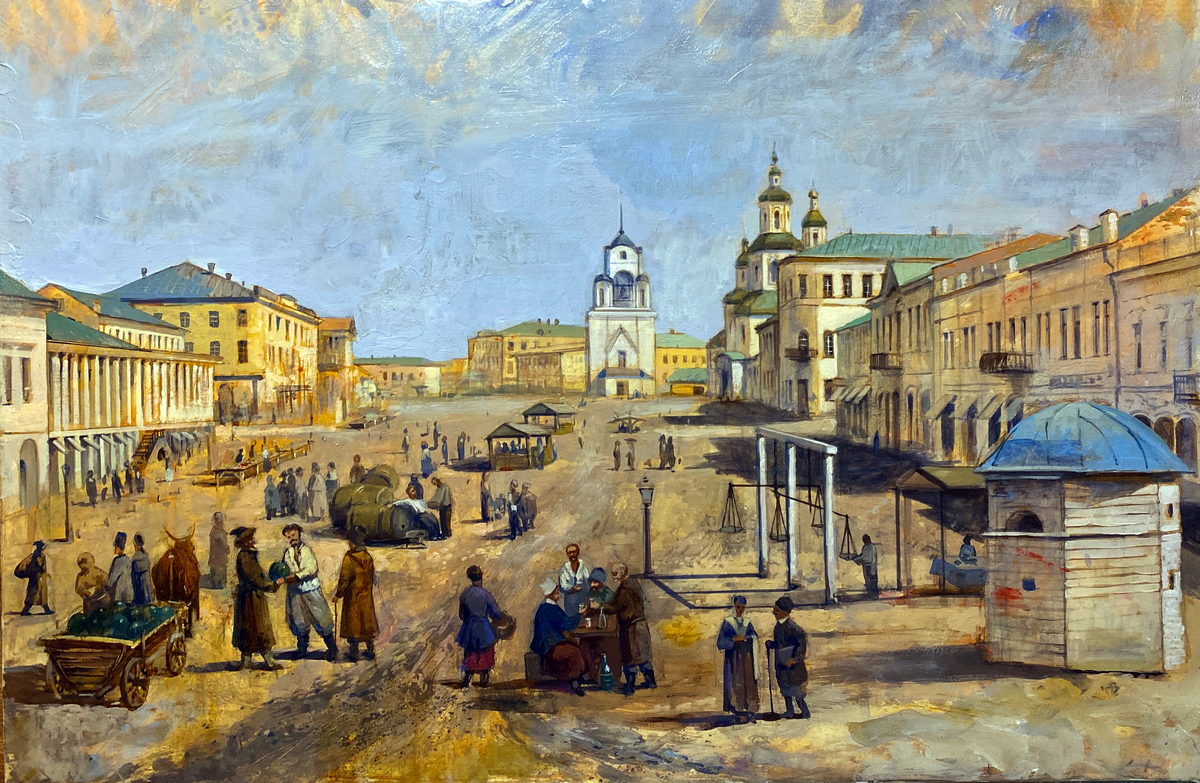
Якщо у харківця закінчувався буряк, йому доводилося обходитися без нього у гіршому випадку кілька днів. По понеділках і п’ятницях у місті були базари, на яких можна було купити будь-що, у тому числі й буряки, які привозили на продаж більш вдалі селяни-городники з якоїсь слободи чи хутора. Ціни кусалися, ранньою весною десяток буряків коштував 5 копійок (для порівняння: 2 фунта солоного сиру тоді коштувало 6 копійок, а звичайного сиру, творогу — 7 копійок; так само 6 копійок коштував фунт свіжого коропа, судака чи леща), а у середині XIX століття сягнули і 10 копійок (2 фунта баранини або свинини можна було купити дешевше). Але для містян, які мали кошти, то не становило жодної проблеми — головне, що борщ зі свіжим буряком смачніший, ніж на житньому квасі. А якщо комусь кортіло купити буряків не в базарний день, то він міг верхи дістатися до торгу біля застави на в’їзді в Харків, де нерідко ціни були нижчими.
Або захотілось містянину, приміром, свіжого сальця, і це не проблема — на базарі можна знайти кілька сортів на різні смаки. Можна купити одразу пуд, а можна — пару фунтів, щоб наступного разу взяти свіжішого. М’ясо тут будь-якого виду: свіже і солонина, яловичина і телятина, свинина і баранина, а ще студень, лівер, нирки, мізки, поросята живі й забиті… Що там казати, якщо в харківських трактирах другої половини XVIII століття щодня подавали смажених поросят і в поганий день їх готували п’ятдесят штук! На базарі можна було купити й готовий яловичий бульйон, який готували там же у великих казанах.
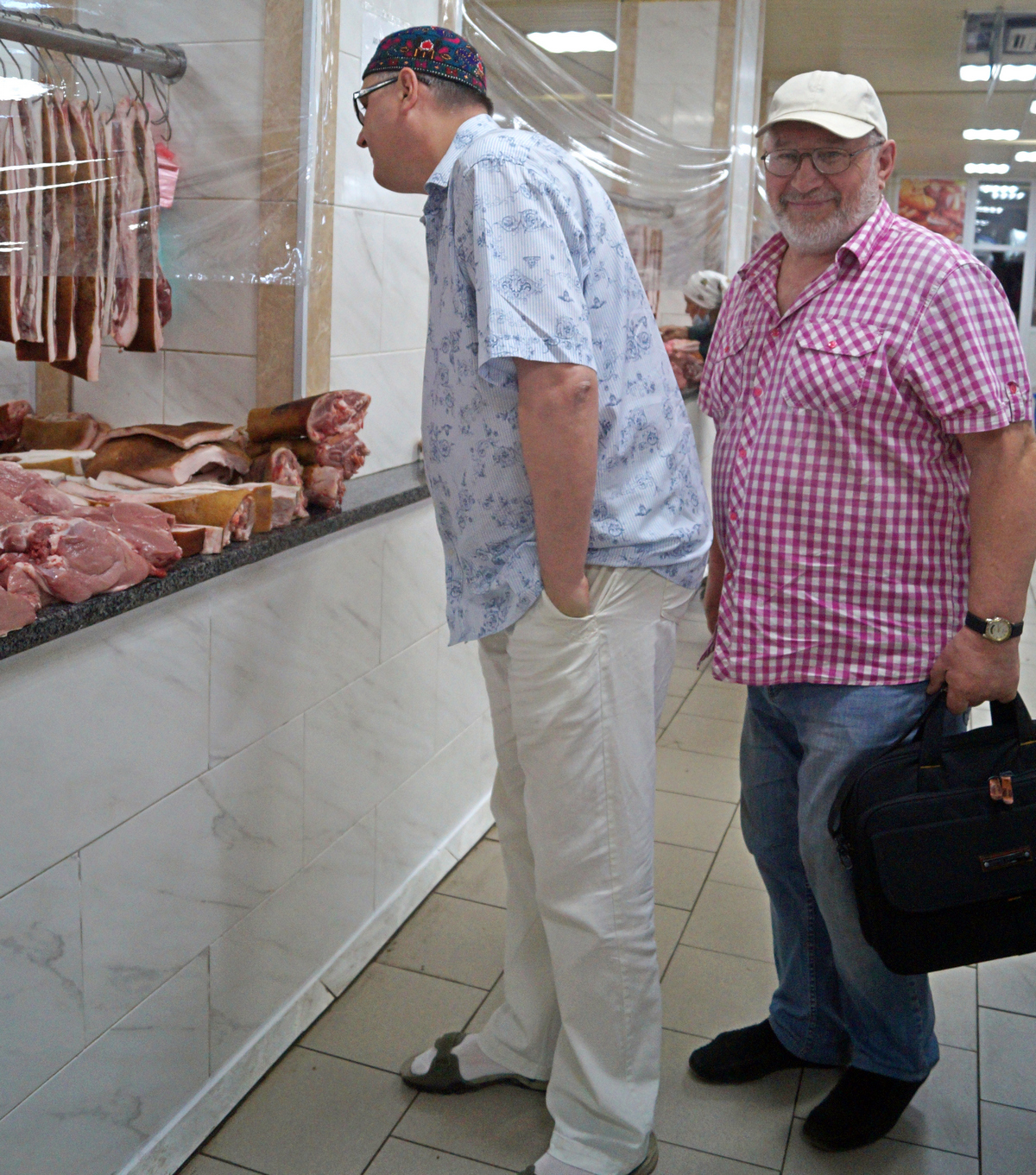
Так само і з птицею: індики, гуси, качки, кури (пізніше торгували окремо каплунами і пулярками), дика птиця — і все продавали на базарах, як живим, так і битим. Селянин забивав курку тільки тоді, коли вона вже більше не неслася, а йому були вкрай потрібні гроші, оскільки десяток яєць довгий час коштував не набагато менше самої птиці. Тож жива курка-несучка, звісно, давала більше прибутку, ніж бита. Для містянина ж курка була не джерелом доходу, а їжею. Він, коли хотів, купував її на базарі чи на торгу і робив із неї юшку чи борщ, фарширував і запікав, або смажив чи додавав до холодцю. Заможніший харківець купував каплуна, аби натерти його спеціями та імбиром і зробити таку печеню, що аромати відчуватиме пів вулиці.
Або захотілось харківцю у піст рибки. Знову ж таки, на базарі вона була на будь-який смак: свіжа і солона, копчена і балик, оселедці голландські і кримські, тарань та чехонь, а ще ікра різної риби. Вибір був надзвичайно великий. Із привозної — осетри, білуга, судак, сьомга, севрюга, лосось; із місцевої — сом, лящ, судак, короп, окунь, карась, лінь, щука…
Хліб у Харкові здебільшого пекли чисто житній або паляниці, з житнього борошна навпіл із пшеничним. Іноземці житній хліб не їли, та і студентам університету з 1805 року його не подавали — лише білі булки. А коли в місті з’явилися іноземні кухарі, всі більш-менш заможні харківці почали їсти тільки білий хліб, іноді, як і іноземці, не звертаючи уваги на піст. Це було досить дороге задоволення. Фунт французького білого хліба коштував 5 копійок, тоді як житнього — лише 1 копійку.
Олія теж була кількох видів: звичайна конопляна, лляна, макова, прованська оливкова та італійська оливкова, а вже з 1840-х років додалась і соняшникова. Так само в асортименті було коров’яче масло — звичайне, чухонське, топлене і не топлене.
Окрім цього, на базарах і торгах можна було купити різний хліб у зерні. І це не все! Ще борошно житнє, пшеничне (кількох сортів твердих і м’яких), гречане, вівсяне, ячмінне. Крупу гречану, вівсяну, ячну, пшеничну і пшоно. Горох, квасолю, чечевицю і мак. Солоні огірки та кавуни, моркву, пастернак, селеру, різноманітну цибулю, горошок декількох сортів. Сири голландські, швейцарські, французькі та пармезан. Маслини та оливки, оцет різних видів, різні гриби.
Ще більш важливими для кухні містян були ярмарки. Вже перший, що був заснований у 1659 році — Успенський — дозволив харківцям зробити запаси хліба, круп, овочів, олії та топленого масла. На середину XVIII століття ярмарків було вже чотири, і на них привозили такі незвичні тоді для селян продукти як рис, картоплю, картопляне борошно, картопляну крупу, крохмаль, каву, лимони і померанці, фініки і інжир, мигдаль, ізюм, горіхи, каштани, кримські та архіпелазькі виноградні вина. Пізніше до них додалися макарони й вермішель.
На харківських ярмарках 1760-х років вже був представлений величезний асортимент прянощів і спецій: шафран, кориця, гвоздика, імбир, мускат, лавровий лист, різні перці…
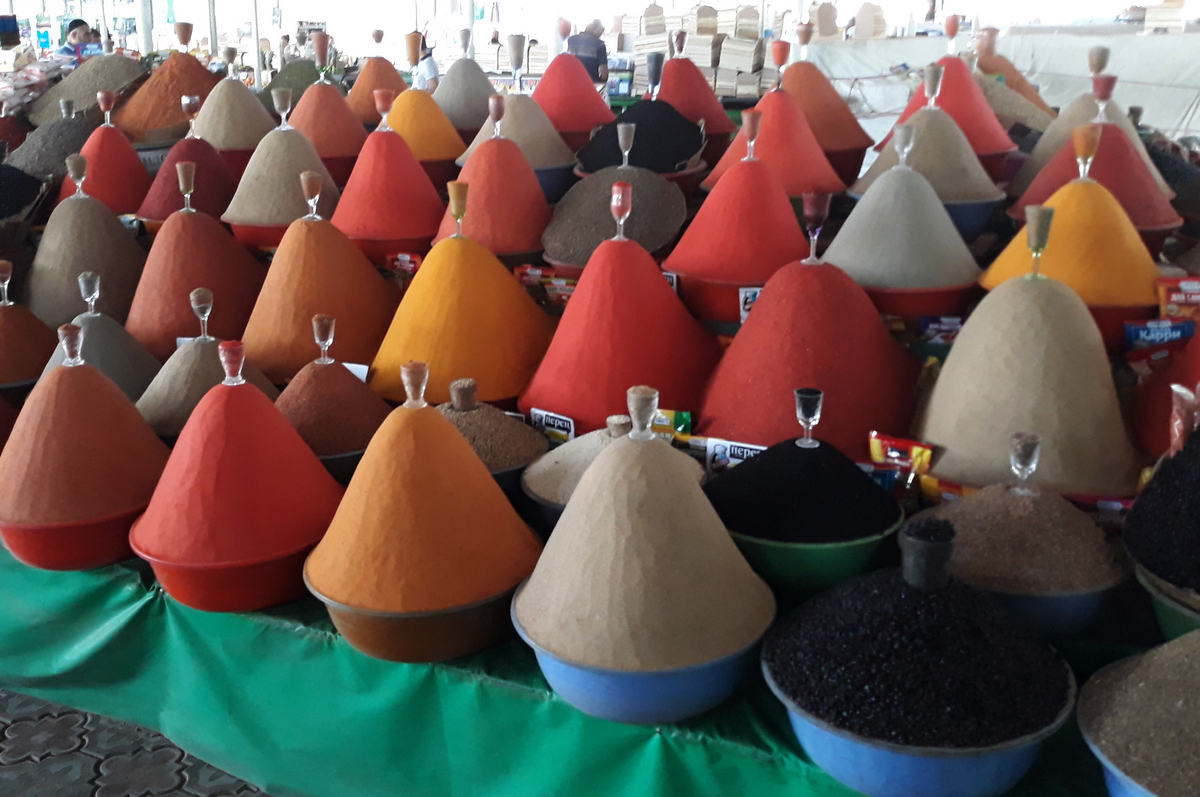
На ярмарках першої половини XIX століття асортимент продуктів став ще більшим. На них продавали величезну кількість какао, чаю, цукру, конфітюрів, варення, шоколаду. Чималим попитом користувалися виноградні вина з Франції, Німеччини, Іспанії та Криму в бочках на 50 відер і напівбочках, пляшках в ящиках. Окрім ярмарків, іноземці продавали виноградні вина в погрібцях у центрі міста, а разом із ними пропонували різних сортів маслини та оливки, пікулі, трюфелі, анчоуси, ковбаси і шинки, сири, оцет, оливкову олію, фрукти у французькій горілці…
Такий багатий вибір основних видів продуктів дозволяв готувати різноманітні страви харківцям різних станів: чиновникам і студентам, дворянам і офіцерам, купцям і міщанам, священикам і церковникам, цеховим і колишнім козакам, які після скасування полкового устрою стали називатися військовими обивателями.
Скажімо, ще у XVIII столітті в Харкові тушки індика чи гуся начиняли фініками, тоді як більшість слобожан взагалі не знали, що воно таке, той фінік. У Харкові тушили картоплю з м’ясом, коли більшість слобожан ще вважали її кормом для свиней, а поміщики вирощували лише для виробництва спирту. Харківці пекли паски і бабки на Пасху зі справжнім шафраном, тоді як для більшості слобожан це було занадто дорого. Харківці заправляли юшки спеціями, одними з перших стали використовувати оливкову, а згодом і соняшникову олію для приготування страв. Тушкування м’яса з каштанами або з великою кількістю зелені теж почалось у Харкові ще наприкінці XVIII століття. Величезний вибір м’яса дозволяв готувати таку небачену для більшості слобожан страву як паштети.
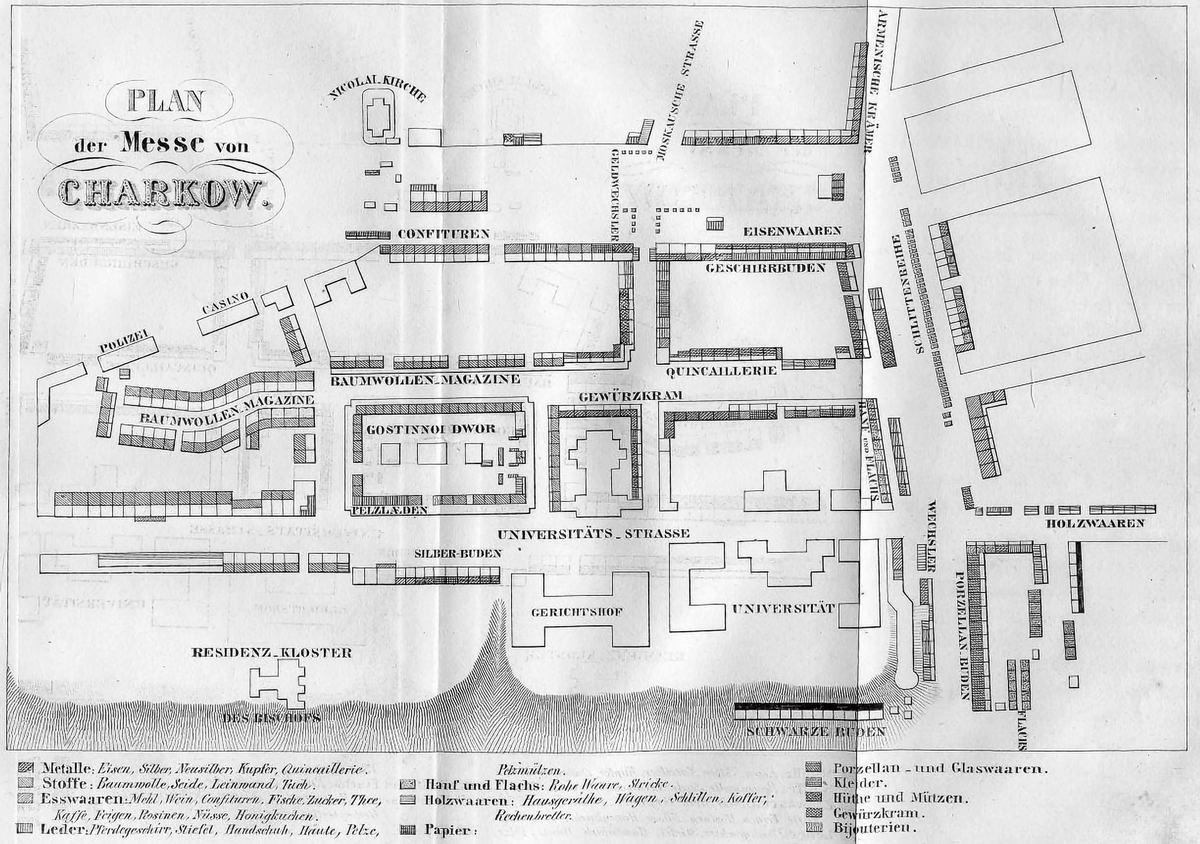
Все це свідчить про те, що у кухні Слобідської України страви старого Харкова посідають окреме, особливе місце. Це кухня більших можливостей і вдосконалень. Кухня більш високого рівня саме завдяки тому, що раніше за інші території Слобідщини набула багатогранності навіть у повсякденних стравах. Саме тому подальші описи саме харківських страв будуть цікавішими та яскравішими, а головне — ближчими до сучасного розуміння кулінарного мистецтва.
Дослідник історії Слобідської України Андрій Парамонов — автор циклу матеріалів «Фортеця Харків» і «Кухня старого Харкова». Читайте колонку автора на MediaPort