Перша посадська церква Харкова: від білгородських попів до першого храму УАПЦ
Озвучено за допомогою ШІ (Google Cloud).
Текст перекладу
The First Posad Church of Kharkiv: From the Priests of Belgorod to the First Temple of the UAOC
What was the first posad (outer civilian settlement) church of Kharkiv? Ask any ordinary citizen, and most likely they will name the Trinity (Troitska) Church. And this will be a mistake! The first posad of Kharkiv actually arose adjacent to the St. Nicholas Skete (Mykolaivskyi Skete), which was founded atop the ancient hillfort by the Belgorod Cathedral of St. Nicholas the Warrior. It was there, shortly after the formal founding of the city, that the very first posad house of worship was erected—St. Nicholas (Mykolaivska) Church.
The St. Nicholas Skete was established in 1646. It was a modest frontier fort (ostrozhok), circular in design, which sheltered the residential house of a priest dispatched from Belgorod, several small dwellings for laborers, and a wooden chapel. By 1648, a small sloboda composed of workers had formed near the Belgorod Well. In order for its population of more than 100 inhabitants to have a designated space to pray, the chapel within the skete had to be structurally converted into a modest, log-built St. Nicholas Church.
The skete did not endure long. Following the construction of the grand Kharkiv Fortress, the Belgorod-based Church of St. Nicholas the Warrior stood zero chance of preserving its territorial possessions. Priest Ivan Alfimov, who managed the hermitage, repeatedly appealed to the Moscow Tsar with formal petitions (cholobytni). In his final petition, dated 1658, he requested that other crown lands be allocated for their use. However, archives do not record exactly under what circumstances the Belgorod clergy abandoned the hermitage: whether they surrendered it for local use free of charge, or whether it was financially bought out by the Ukrainian Cossacks, whose private courtyards had advanced directly to the fort's wooden walls. We can only state with certainty that St. Nicholas Church remained on its historical site even after the departure of the Belgorod priesthood. In 1659, it officially became the central parish church for the civilian settlement (posad) that sprawled across the eastern slopes of the Kharkiv hillfort.
Regrettably, during the modern construction of the "Nikolsky" shopping and entertainment center, the commercial developer flatly denied permission for comprehensive archaeological excavations, although it was precisely at that location that critical artifacts relating to the city's very first settlers could have been unearthed.
The earliest priest of the settlement's St. Nicholas Church registered in archival sources for the year 1693 is listed as Priest Havryla. According to the historical acts of the Kuryazhsky Monastery, by 1703 he had already been succeeded by Priest Oleksandr Petrovych. At the close of the 17th century, a new, substantially larger timber St. Nicholas Church was raised, as the active parish had expanded to encompass 130 households. The outstanding, majestic architecture of this timber structure is evidenced by the fact that when the Moscow Tsar Peter I entered Kharkiv on June 2, 1709, he mistook the church for a grand cathedral and chose to attend a holy service inside it.
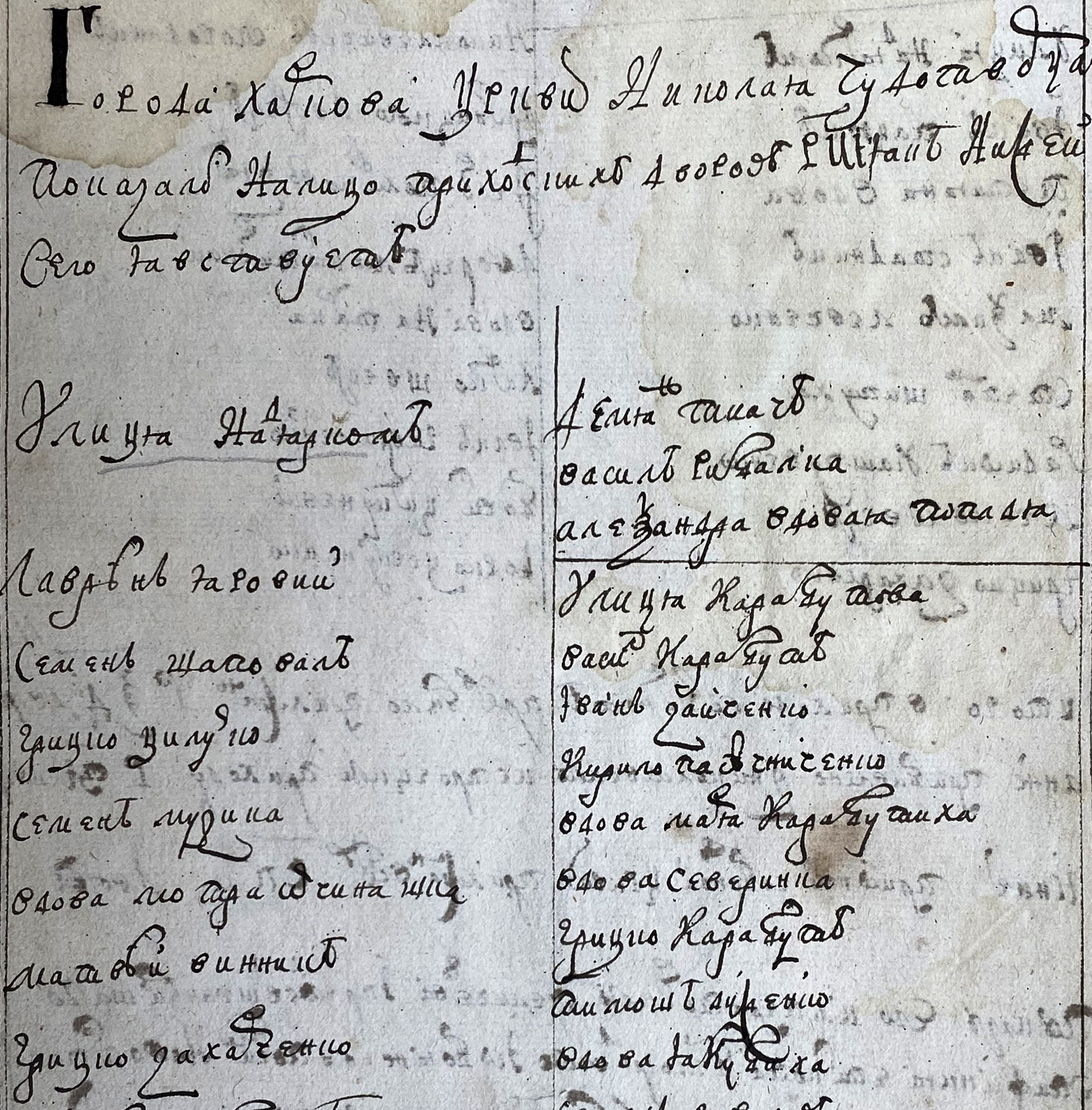
By 1724, the St. Nicholas parish had ceded several streets containing over 60 households to the Assumption (Uspenska) parish, though conversely, it absorbed one street from the Ascension (Voznesenska) parish. In total, six streets belonged to the St. Nicholas Church: Nad Yarkom, Shapovalova, Karabutova, Bibikova, Shemeteva, and Keleberdina, comprising an aggregate of 118 households. The rector at that time was Priest Mykhailo.
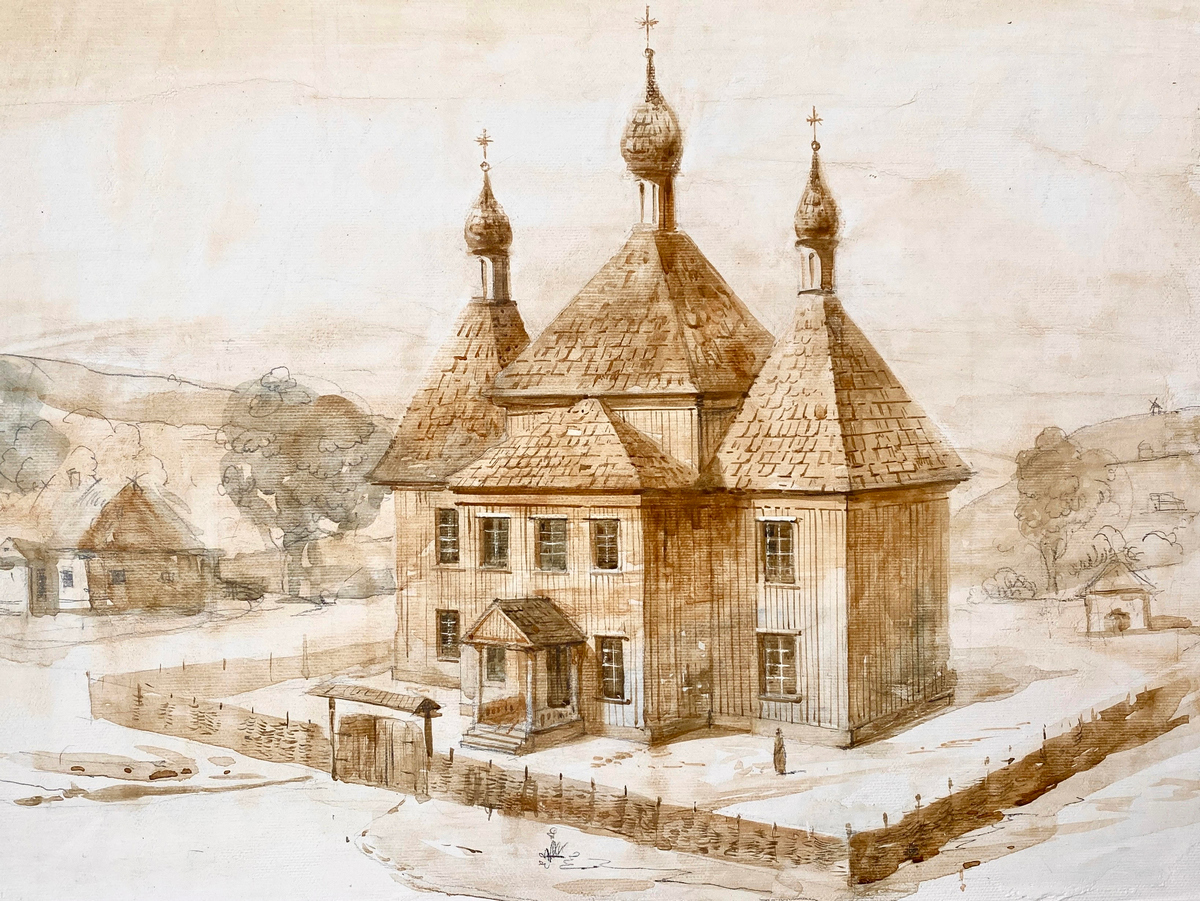
This second wooden St. Nicholas Church was completely destroyed during a devastating urban fire on May 31, 1733. The parishioners lost not only their spiritual home but also ancient historical icons, liturgical utensils, and irreplaceable church books, many of which dated deep into the 17th century. The community only managed to construct a new wooden church between 1740 and 1742, with the freestanding bell tower completed even later.
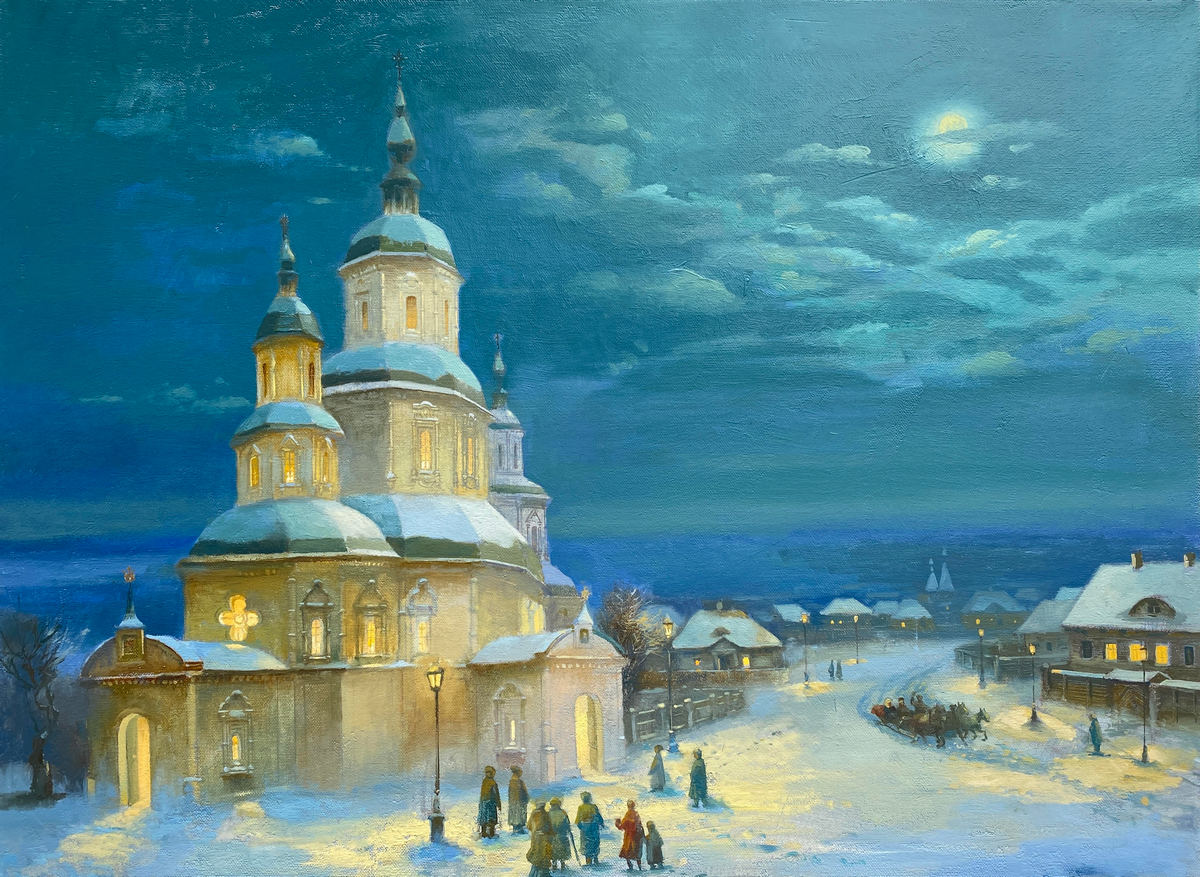
But this structure did not endure long either. By the second half of the 18th century, the parish had grown exceptionally affluent, prompting a decision in 1674 to construct a magnificent new stone St. Nicholas Church. They selected the adjacent Intercession (Pokrovsky) Cathedral of the Collegium Monastery as their architectural blueprint. The master builders literally replicated the silhouette of its multi-tiered roof crowns and its vertical dimensions, omitting only the lowest baseline tier. In terms of total floor area, the new church actually surpassed the Intercession Cathedral. Positioned on the highest geographic elevation of the Kharkiv Fortress, St. Nicholas Church actively rivaled the monastery cathedral in height. Its elaborate external brick decor was virtually identical to that of the Intercession Church. Only within the two tiers of windows gracing the central upper structure could the distinct stylistic influence of Elizabethan Baroque be felt. Their ornate ceramic medallions, measuring roughly 60 to 70 centimeters in diameter, were decorated with thematic and ornamental relief motifs. In surviving archival photographs, one can clearly distinguish the figure of St. Nicholas the Wonderworker wielding a sword, a decorative composition nestled inside a fluted vase, and a classic four-pointed ornamental cross. The remaining artistic subjects are difficult to identify due to degradation.
The new masonry St. Nicholas Church was formally consecrated in 1770. There is a high historical probability that the renowned philosopher Hryhoriy Savych Skovoroda was physically present at the ceremony, as he was actively teaching at the Additional Classes located immediately nearby at the time. Furthermore, the abbot of the church during this period was Skovoroda’s direct neighbor behind the monastery cell walls, Ioann Hilevsky.
Following the consecration of the new stone sanctuary, the old wooden church was systematically dismantled. The perimeter fence, however, remained an archaic wooden structure covered with traditional shingles (honta). Inside this enclosure, beyond the church and the bell tower, stood a brotherhood house (essentially a single-room timber cottage), a wooden parish school, and two small timber shelters for the destitute. Within the same courtyard, the church operated its own private brewery, equipped with a massive copper cauldron and dozens of kadi (large wooden cooperage tubs). The church also maintained its own certified weighing scales, which merchants rented during seasonal trade fairs, alongside an extensive storage cellar and an icehouse (liodovyk). Every Sunday and on holy feasts, the church harvested monetary offerings from the parishioners. For executing funeral rites, the priests typically accepted payment in rolls of fine cloth. On holidays, the parish also reaped a steady income by selling its own harvested honey, supplemented by the rental of four storage vaults located beneath the bell tower structure. Within the initial five years following the construction of the masonry church, the interior was fully decorated, and the parish treasury had amassed a healthy surplus of 954 rubles in cash.
In 1787, the old wooden bell tower was physically dragged by teams of oxen to the western facade of St. Nicholas Church, where master builders laid a solid stone foundation beneath it and encased the structure in brickwork, reshaping it into the aesthetic canons of Classical architecture. The provincial architect Petro Yaroslavsky appended four domed alcoves along the flanks of the bell tower, crowning the central volume with a low dome topped with an elegant spire. The lowest tier of the tower housed secure storage vaults where the property of several adjacent parish churches was safely deposited. The base of the bell tower was enveloped by a two-tiered gallery featuring a heavy, stone-rusticated arcade on the ground level. By the dawn of the 19th century, this basement floor was being leased out to prominent Kharkiv merchants for the retail sale of vintage grape wines, while nearby townspeople organized a daily open-air market trading in tobacco, pipes, dried fish (taran), and utilitarian pottery.
In 1828, the municipal administration resolved to mount a public clock onto the bell tower of St. Nicholas Church, responding to intense, sustained demands from nearly all sectors of local society. The issue stemmed from an early 19th-century trade ordinance that strictly forbade wholesale middlemen from purchasing agricultural goods from incoming peasants before a designated morning hour. Exploiting the total absence of a public clock, these middlemen systematically intercepted the peasants under the cover of darkness, purchasing their produce at rock-bottom wholesale prices and later retailing it to the public at heavily inflated metrics. At contemporary market values, purchasing and engineering the clockwork would cost 3,600 rubles—funds that the municipal treasury simply did not possess.
The entire financial burden was assumed by a wealthy Kharkiv merchant named Kushinnikov, who operated the local coachmen's exchange; he required an absolute timekeeper to accurately calculate transit metrics and log proper passenger fares. Kushinnikov supplied 3,000 rubles for the acquisition. The clockwork was formally calibrated and installed by a foreign master watchmaker from Poltava named Eberwein. Despite the immense financial expenditure, Eberwein only succeeded in starting the mechanism in 1830, and within two short years, it already required extensive structural repairs.
St. Nicholas Church underwent a major structural expansion in 1832. A heated winter sanctuary was built directly above the main entrance, and in 1834, a massive porch housing the chapel of St. Mitrofan the Wonderworker was added to the complex. By 1835, St. Nicholas Church had lost the vast majority of its original unified composition; following the construction of a heavy refectory executed in the Gothic Revival style, the complex ultimately presented a highly eccentric hodgepodge of clashing architectural styles.
In the early 1850s, by direct decree of Governor-General Sergei Kokoshkin, the original bell tower was completely dismantled due to severe structural dilution, and the surrounding square was cleared of the tattered wooden market stalls that cluttered the perimeter. A new stone bell tower did not materialize for another decade and a half. In 1886, it was raised above the church entrance as a three-span structure designed in the historicist Pskov architectural style, drafted by architect Boris Pokrovsky. The exact physical appearance of St. Nicholas Church during this era has been preserved for history thanks to a photograph captured by the pioneer photographer Vasyl Dosyekin in 1886.
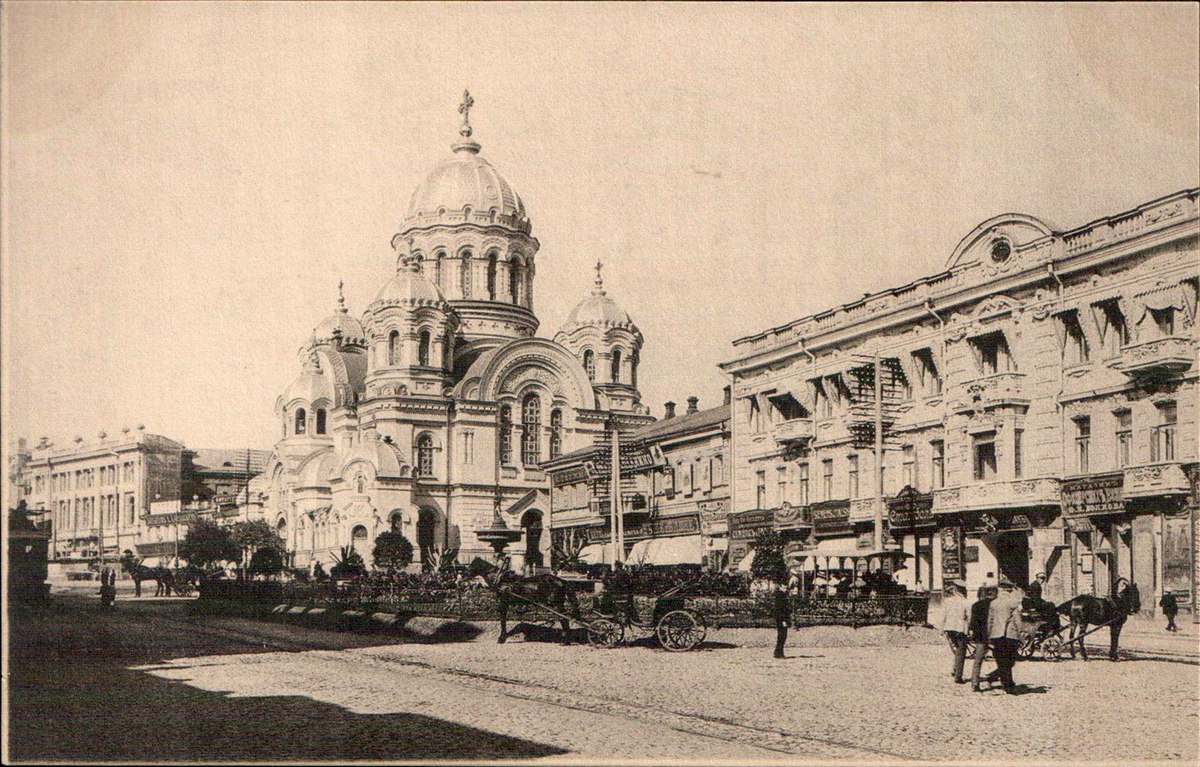
However, the era of this historic stone church was drawing to a close. A majority of the modernizing townspeople increasingly perceived the structure as archaic, dilapidated, and aesthetically deficient. In 1894, by a majority vote, the parishioners resolved to completely demolish the monument to erect a modern temple. Although Kharkiv’s veteran preservationists and antiquarians actively campaigned to shield the structural heritage of St. Nicholas Church, their resistance was futile. The historic church was entirely razed, and in its place, the diocesan architect Volodymyr Nemkin constructed a massive, new five-domed cathedral between 1894 and 1896.
Following the Bolshevik consolidation, on April 4, 1921, the Soviet authorities formally approved the legal charter of the First Kharkiv Parish of the Ukrainian Autocephalous Orthodox Church (UAOC). At a historic assembly on April 24, 1921, Matviy Terentiyovych Kytychenko was officially elected chairman of the presidium, Artem Mykolayovych Drazhevsky was chosen as bursar, and Hrytsko Ivanovych Oleshko was elected scribe. At that initial juncture, the local UAOC parish in Kharkiv comprised a core of 25 dedicated parishioners, all men. The formal constituent assembly convened on January 15, 1922, and on March 5 of that same year, the grand St. Nicholas Cathedral was officially transferred to the custody of the UAOC. A week later, on March 12, a solemn metropolitan prayer service was celebrated to mark the historic inauguration of divine services conducted exclusively in the Ukrainian language inside the St. Nicholas Cathedral. The Ukrainian parish instantly galvanized 677 citizens within Kharkiv, with the congregation expanding rapidly thereafter.
Naturally, the Soviet totalitarian authorities viewed the UAOC St. Nicholas Cathedral as a dangerous, volatile hotbed of Ukrainian national consciousness. At the very first operational opportunity—cynically citing a civic planning pretext that the cathedral’s physical structure obstructed the movement of city streetcars—the regime completely blew up the historic cathedral using explosives in 1930.
“Kharkiv Fortress” is an ongoing historical series by Andriy Paramonov, a dedicated researcher of Sloboda Ukraine's history. Read the author’s full column on MediaPort.
Яка перша посадська церква Харкова? Спитайте будь-якого пересічного містянина, і, скоріш за все, він назве Троїцьку. І це буде помилка! Оскільки перший посад Харкова виник поруч із Миколаївським скитом, що був заснований на городищі білгородським собором Миколи Ратного. І саме там невдовзі після заснування міста була зведена перша посадська церква — Миколаївська.
Миколаївський скит було засновано у 1646 році. Це був невеличкий острожок, круглий в плані, в якому містилися будинок попа з Білгорода, кілька будиночків для робітників і каплиця. У 1648 році поблизу Білгородської криниці була утворена слобідка з робітниками. Аби понад 100 її жителів мали змогу молитися, і довелося капличку в скиту перебудувати на невеличку Миколаївську церкву.
Скит проіснував недовго. Після побудови Харківської фортеці Білгородська церква Миколи Ратного не мала шансів зберегти свої володіння. Піп Іван Алфімов, який керував скитом, неодноразово звертався з чолобитними до московського царя. В останній, від 1658 року, він просив надати інші землі для користування. Однак невідомо, яким саме чином білгородські попи покинули скит: чи залишили для користування безкоштовно, чи його викупили українські козаки, подвір’я яких впритул наблизилися до стін. Можна лише констатувати, що Миколаївська церква залишилася на своєму місці й після уходу білгородського священства.
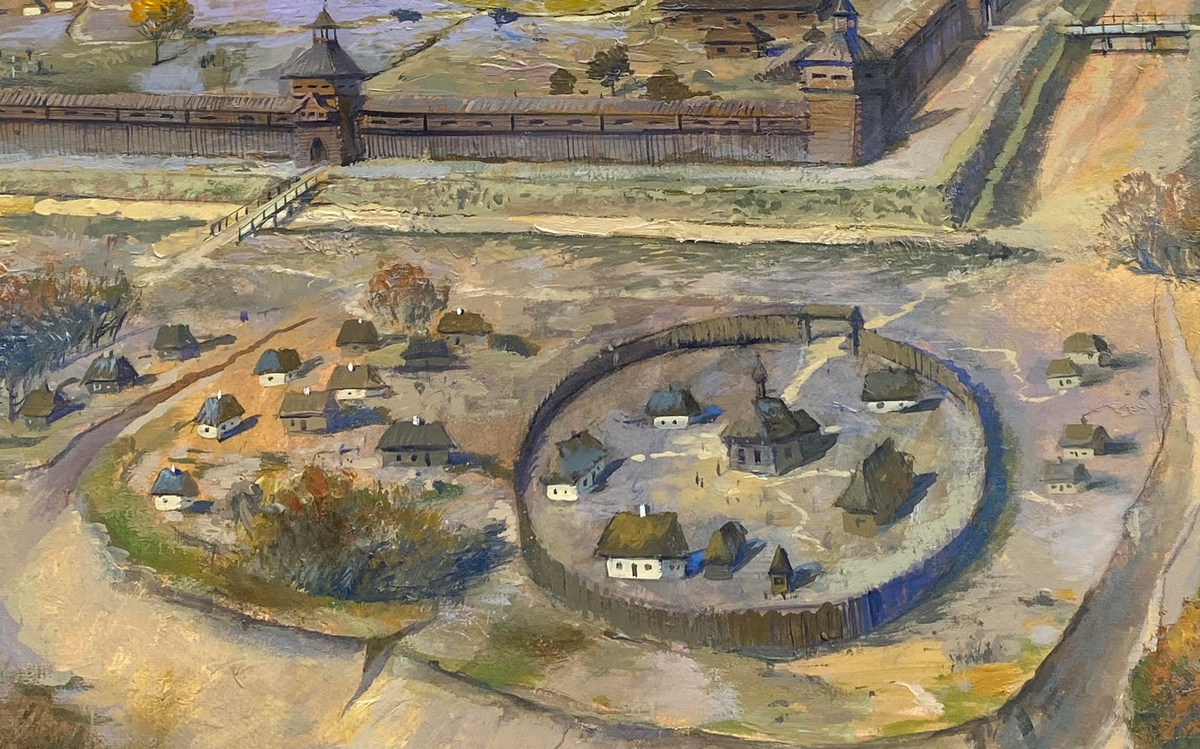
У 1659 році вона стала парафіяльною для посаду, який розкинувся на східних схилах Харківського городища. На превеликий жаль, під час будівництва торговельно-розважального центру «Нікольський» забудовник не дав дозволу на проведення археологічних досліджень, хоча саме там могли бути знайдені певні артефакти, що стосуються перших поселенців міста.
Першим священником посадської Миколаївської церкви у джерелах за 1693 рік вказаний піп Гаврила. Згідно з актами Курязького монастиря 1703 року його вже змінив священик Олександр Петрович.
Наприкінці XVII століття був побудований новий, значно більший Миколаївський храм, оскільки парафія зросла до 130 дворів. Про його видатну архітектуру свідчить те, що московський цар Петро Олексійович при в’їзді в Харків 2 червня 1709 року прийняв храм за собор і перебував на службі саме в ньому.
На 1724 рік Миколаївська парафія поступилась Успенській кількома вулицями з понад 60 дворами, проте до першої перейшла одна вулиця від Вознесенської парафії. Загалом до Миколаївської церкви відносилися шість вулиць (Над ярком, Шаповалова, Карабутова, Бібікова, Шеметєва, Келебердіна), які складалися зі 118 дворів. Священиком тоді був піп Михайло.
Другий дерев’яний Миколаївський храм згорів під час пожежі 31 травня 1733 року. Парафіяни втратили не лише храм, а й старовинні ікони, начиння, церковні книги, багато з яких датувалися XVII століттям. Новий дерев’яний храм парафіянам вдалося побудувати тільки у 1740-1742 роках, а дзвіницю — ще пізніше. Але і ця церква простояла недовго. У другій половині XVIII століття парафія була доволі заможною, тому в 1764 році вирішили побудувати нову кам’яну Миколаївську церкву. За взірець взяли сусідній Покровський собор Колегіумського монастиря. Будівельники буквально повторили силует його вінчання і вертикальні розміри без нижнього ярусу.
За площею новий храм перевершував Покровський. Розташований на найвищій точці рельєфу Харківської фортеці Миколаївський храм змагався висотою з монастирським собором.
Цегляний декор був практично ідентичним до Покровського храму. Лише у двох ярусах вікон центрального верху відчувався вплив бароко Єлизаветинського часу. Їхні керамічні медальйони діаметром близько 60-70 см прикрашали тематичні та орнаментальні мотиви. На старих фотографіях можна побачити фігуру Миколи Угодника з мечем, декоративну композицію в рифленому вазоні та чотирикінцевий декоративний хрест. Решту сюжетів розпізнати складно.
Новий Миколаївський храм був освячений у 1770 році. Є велика вірогідність, що при цьому був присутній Григорій Савич Сковорода, який на той час був викладачем в Додаткових класах, розташованих поруч. Та й настоятелем храму в цей час був його сусід за монастирськими келіями Іоанн Гілевський.
Після освячення нового храму старий дерев’яний був розібраний. Огорожа ж залишилась старою, дерев’яною, критою гонтою. Всередині огорожі, крім церкви і дзвіниці, стояли братський будинок (фактично дерев’яна хата на одну кімнату), дерев’яна школа і дві хати для бідних, теж дерев’яні. На тому ж подвір’ї діяла власна броварня з великим мідним казаном, десятками кадей. При храмі були свої ваги, якими користувалися купці на ярмарках, а також льох і льодовик. Щонеділі та на свята храм збирав гроші з парафіян. За відспівування священики брали сукном. На свята продавали свій мед. Чотири комори під дзвіницею теж давали дохід. За перші п’ять років після побудови нового храму він був повністю оздоблений всередині, а в церковній казні назбиралося 954 рублів грошима.
У 1787 році стару дерев’яну дзвіницю перетягнули волами до західного торця Миколаївської церкви, підвели під неї кам’яний фундамент і обклали цеглою, надавши вигляд класичної архітектури. Губернський архітектор Петро Ярославський добудував із боків дзвіниці чотири купольні альтанки, а центральний об’єм увінчав невисоким куполом зі шпилем. У нижньому ярусі дзвіниці розташовувалися «комори», де зберігалося майно кількох парафіяльних храмів. Основа дзвіниці була оточена двоярусною галереєю з кам’яною рустованою аркадою в першому ярусі. Вже на початку ХІХ століття підвальний поверх здавали в найм харківським купцям для продажу виноградних вин, а поруч містяни влаштували щоденний базар, де торгували тютюном, люльками, таранню та гончарними виробами.
У 1828 році міська управа вирішила розмістити на дзвіниці Миколаївської церкви годинник, оскільки цього вимагало практично все суспільство. Справа в тому, що на початку XIX століття перекупникам не дозволялося раніше визначеного часу скупити товар у селян, які приїхали на базар зі своєю продукцією. Користуючись відсутністю годинника, перекупники скуповували товари за оптовими цінами, а продавали вже за завищеними. За тогочасними цінами купівля та встановлення коштували б 3600 рублів. Таких грошей на це у міста не було. Витрати взяв на себе утримувач біржі візників, харківський купець Кушинніков, якому годинник також був потрібен, щоб точно вираховувати час у дорозі та стягувати правильну ціну з пасажирів. Він надав на купівлю 3000 рублів. Встановлював — годинниковий майстер з Полтави, іноземець Ебервейн. Незважаючи на значні витрати, йому вдалося запустити годинник лише в 1830 році, а вже за два роки його довелося ремонтувати!
Сама Миколаївська церква була розширена у 1832 році. Над її входом був добудований теплий храм, а у 1834 році до неї додали масивний притвор із храмом Митрофана Чудотворця. Вже на 1835 рік Миколаївська церква втратила більшість своїх первісних композиційних форм, а завдяки трапезній в готичному стилі взагалі виглядала як мішанина архітектурних стилів.
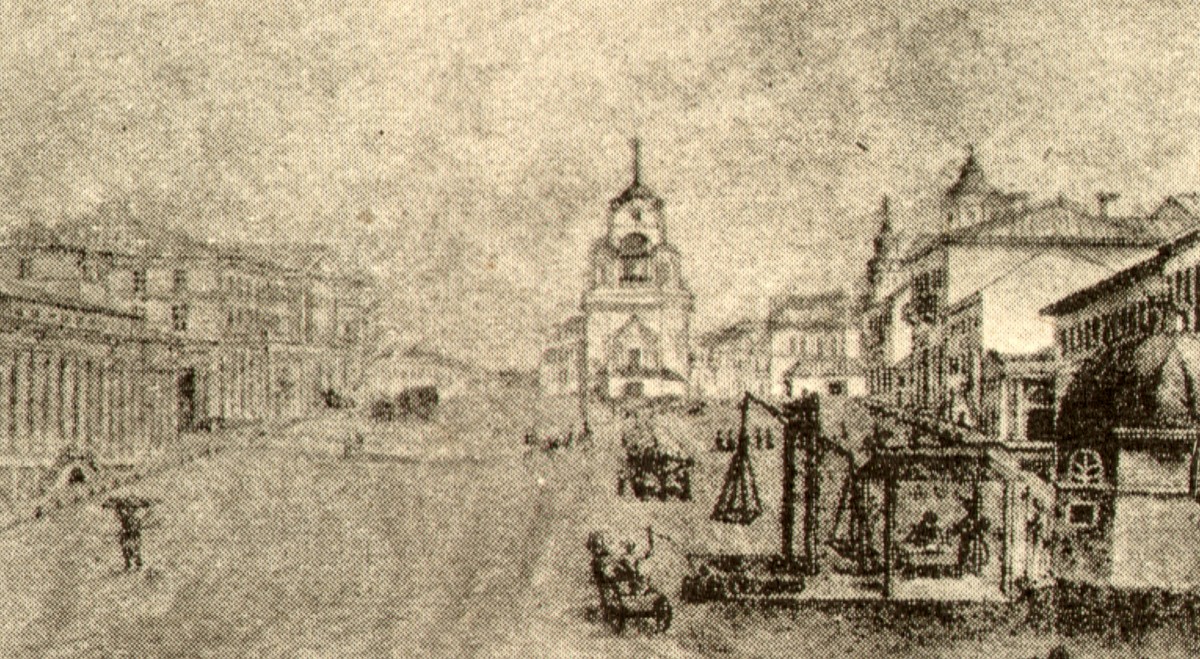
На початку 1850-х років за наказом генерал-губернатора Сергія Кокошкіна дзвіницю Миколаївської церкви розібрали, оскільки вона вже була вітхою, а площа навкруги була захаращена дерев’яними балаганами торговців. Нова кам’яна дзвіниця з’явилася лише за півтора десятиліття. У 1886 році її побудували в стилі псковських дзвіниць над входом у храм у трьох прольотах за проєктом архітектора Бориса Покровського. Тогочасний вигляд Миколаївської церкви зберігся до наших часів завдяки світлині фотографа Василя Досєкіна, зробленій саме у 1886 році.
Однак часи кам’яного храму вже добігали кінця. Більшість містян вважали його старим, вітхим і поганої архітектури. У 1894 році більшістю голосів парафіяни вирішили розібрати його і звести новий. Старожили Харкова, поціновувачі старовини активно захищали споруду Миколаївської церкви, однак все було марно. Стару церкву розібрали, а на її місці єпархіальний архітектор Володимир Нємкін побудував у 1894-1896 роках новий п’ятиглавий храм.
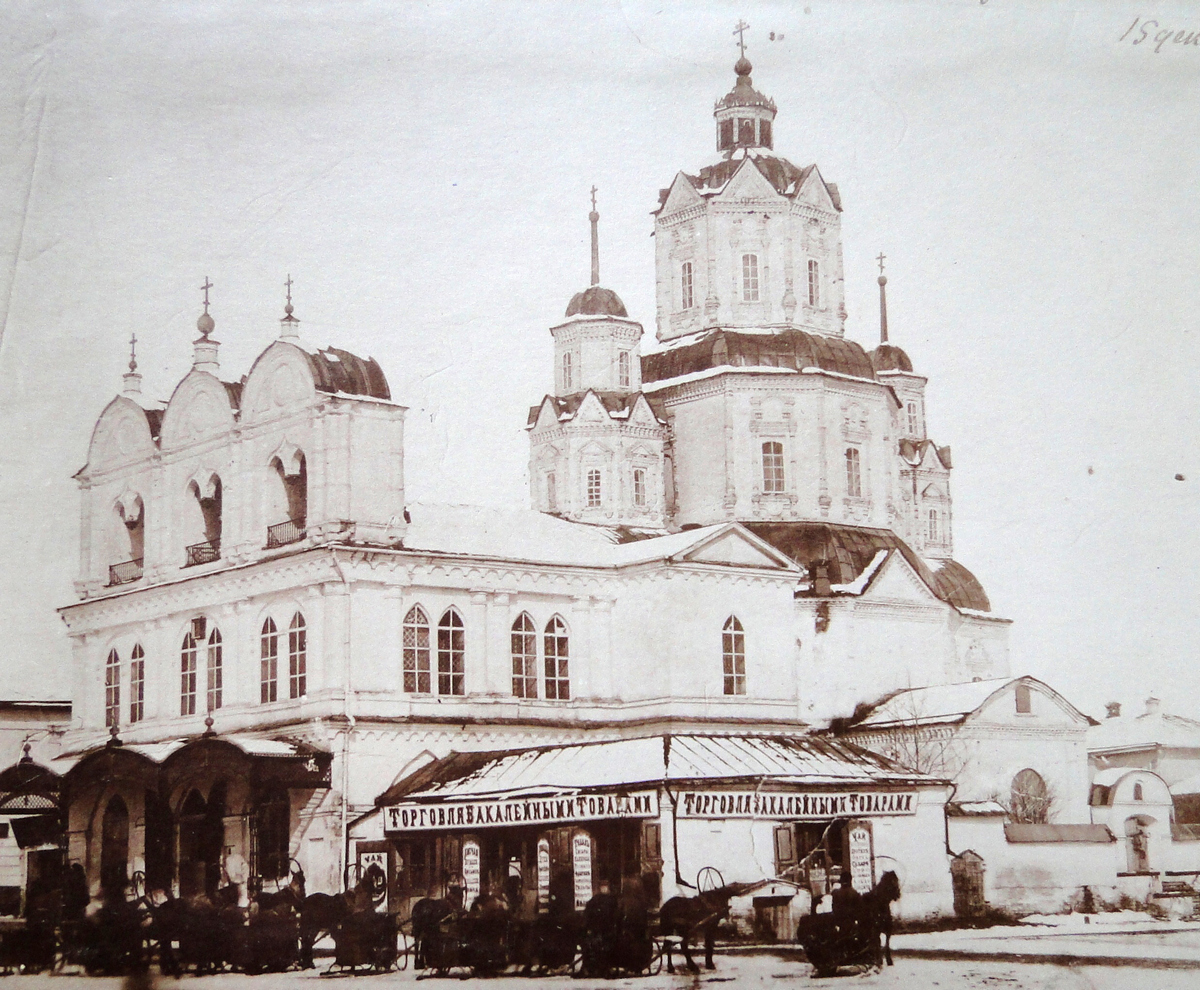
У радянські часи, 4 квітня 1921 року, було затверджено статут Першої харківської парафії Української автокефальної православної церкви. На зборах 24 квітня 1921 року головою президії було обрано Матвія Терентійовича Китиченка, скарбником — Артема Миколайовича Дражевського, писарем — Грицька Івановича Олешка. Тоді до парафії УАПЦ в Харкові входило 25 парафіян, всі чоловіки. Установчі збори відбулися 15 січня 1922 року, а 5 березня того ж року Миколаївський собор було передано УАПЦ. За тиждень, 12 березня, відбувся митрополичий молебен у зв’язку з початком служби Божої українською мовою в Миколаївському соборі.
Українська парафія одразу об’єднала 677 людей у Харкові, згодом чисельність парафіян збільшилася ще. Звісно, що радянська влада вважала Миколаївський собор розсадником українського націоналізму і за першої-ліпшої нагоди, пославшись на те, що храм заважає руху трамваїв, підірвала його у 1930 році.
Дослідник історії Слобідської України Андрій Парамонов — автор циклу матеріалів «Фортеця Харків». Читайте колонку Андрія Парамонова на MediaPort